
AI disclosure statement: AI was used to transcribe audio files
Listen to the whole story here:
Sung Kang’s new film Drifter, which premiered at the Toronto International Film Festival, is putting an Asian story at the center of a film about drifting. While Asian, particularly Japanese, influence has helped shape North American car culture, Asian representation on screen has not always followed.
“Even to this day, everything that’s in car culture now, a lot of it stemmed from Japan and the car culture there,” said Sam Du, former editor-in-chief of iconic car magazine Super Street and longtime automotive journalist.
Kang, best known for playing Han in the Fast and Furious franchise, directed, wrote and stars in the film. Drifter follows a Korean-American racetrack custodian with a talent for drifting and a dream to be recognized for his skill.
For Liam Thurston, a Toronto drift car owner and enthusiast, the connection between drifting and Asian car culture can be seen in the cars themselves.
“I think they’re heavily tied into each other, especially since the majority of the big drift cars currently are Japanese manufactured. And a lot of the culture here in North America comes from the Japanese drift community and the old tune trends they used to do in Japan,” he said.
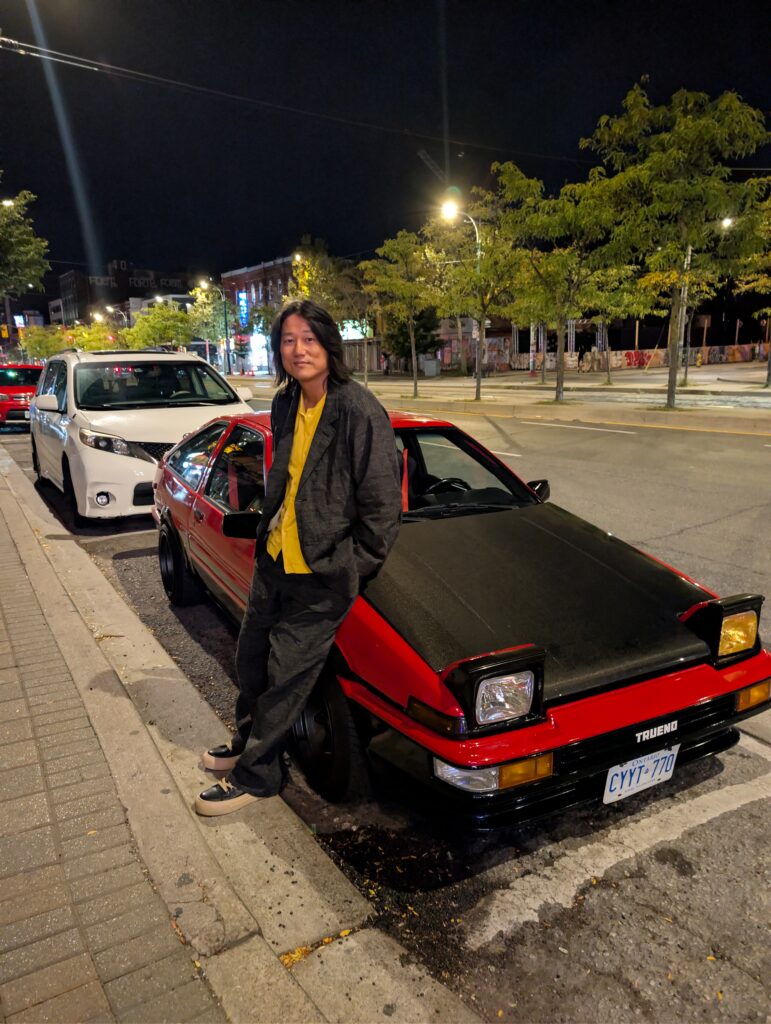
Drifter brings that connection into the film through the main character, Tree’s Toyota AE86, an older Japanese car that becomes a source of comfort for the character as he struggles with feeling alone.
Kang says the car represents more than just an old car.
“Life is an old Toyota Corolla, it has problems, it breaks down, sometimes it starts, sometimes it doesn’t. But for some weird reason the car gods bless you with a Lola [The Toyota AE86] and she’s always there for you. Even when she’s not even running, she will listen to you, she will let you sit inside her and hug you, she will not judge you. And so that is what the car community has always represented for me,” said Kang.
Du has watched that influence become more mainstream over the years.
“Asian car culture is so mainstream now, and back then it was so foreign,” Du said. “You’d go to any events and you go to any U.S. car media. It was all domestic cars.”
For those involved in the scene, that growth is about more than the cars themselves. The community has also become a place where people from different backgrounds can connect through a shared interest.
“It’a a lot more than just showing up and looking at cars. It’s talking to people, bonding with people of all ages and cultures and having a shared interest. And it all starts from, wow, you have a cool car. And I think it’s very beautiful” said Thurston.
Thurston says those connections can continue beyond the car scene.
“I feel like the cars themselves are just an entry point. And once you’re in, it’s a lot deeper than just the cars,” said Thurston.
But while Asian influence has become increasingly visible within car culture, Du says Asian people have not always been represented at the centre of the stories surrounding it.
“When Fast and Furious came out, the Asians weren’t the main characters,” said Du. “So to see it grow to Tokyo Drift and Drifter, now Sung Kang’s the main character in his own movie, I think it shows how far we’ve come.”
When The Fast and the Furious: Tokyo Drift was released in 2006, it was through Han that Kang first became connected to car culture, with the character becoming one of the franchise’s most recognizable figures behind the wheel.
“It showed Americans and people from North America all around how cool Japanese cars can be and how cool the drift culture is,” said Thurston. “I feel like kids over here, instead of wanting Mustangs or American muscle cars, they started to look towards the Japanese cars and Asian car culture,”
Nearly two decades later, Kang is taking a different position in the story. Rather than only playing a character behind the wheel, he is now telling his own car story.
“Everyone associated me with this wonderful character I got to play, Han. Everything is perfect, he has everything figured out, his hair is always perfect, he drives the perfect car, nothing ever breaks down, but that’s not how life works,” Kang said.
He says Drifter goes beyond its focus on cars and explores what it means to feel seen and find a place to belong. “This movie is for anyone that felt like they did not belong, they were not seen at one time. So it’s not just for the car community, but it’s for everyone out there.”

Reporter, OTR, F2026.
