
AI disclosure statement: Grammarly were used during the production of this article.
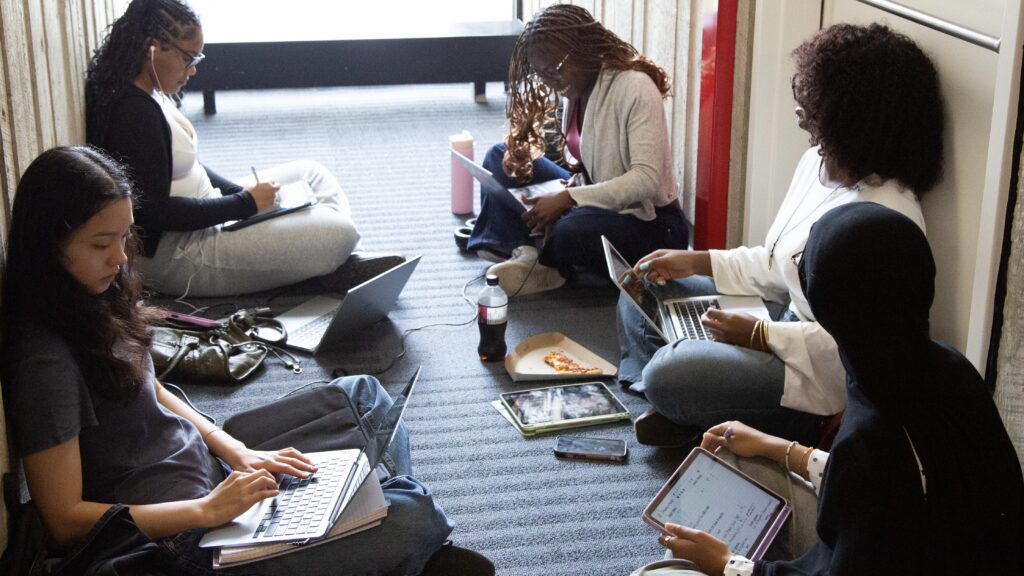
“I felt prepared to advocate, but I was not prepared to tackle the amount of steps that it takes,” said Chelsea Collins, describing their experience accessing disability support in post-secondary education. Collins is a fourth-year Toronto Metropolitan University (TMU) student.
Recent changes to special education programs in Ontario signalled a potential drop in services, something Ontario’s NDP has raised concerns about as it pertains to mental-health supports.
According to the most recent report from the Ontario Financial Accountability Office (FAO), they estimated that “provincial operating funding to school boards will decline to $15,074 per student in 2026-27, $14,850 per student in 2027-28 and $14,775 per student in 2028-29.” The Auditor General’s May 2026 report found assessment backlogs at the Toronto Catholic and Peel boards, and that 34 per cent of students waited more than a year for specialist assessments.
For some students, the process can also create financial challenges when additional documentation or assessments are needed. Psychoeducational assessments can cost thousands of dollars in Canada, with some providers listing costs between $3,000 and $4,500.
Students with disabilities can access a range of accommodations, service and financial assistance through provincial and federal programs. Ontario’s Student Assistance Program (OSAP) provides financial assistance for under-represented learners, while federal programs offer grants and services for students with permanent disabilities. Collins said navigating accommodations affected the course that they were able to take and created financial difficulties as her disability became more difficult to manage.
Former high school Principal Sara Miller said schools can help students prepare by connecting them with resources and discussing how support may change after graduation.
“SERTs would do the transition meetings, inform students and families of campus resources, and review the process for moving the IEP to post secondary learning institutions,” Miller said.
Miller said schools could also, where possible, have former students with individual education plans (IEP) return to speak with Grade 12 students about their experiences with having an IEP in university.
Even with an understanding of the education system, navigating the changes in accommodations and their funding can still be difficult on a personal level. Miller said she experienced this with her own daughter, who was resistant to having accommodations when she entered university at 18-years-old.
As a teacher and administrator, Miller said she understood what her daughter was supposed to receive based on her learning profile, but her daughter ultimately did not pursue an IEP for postsecondary education. “She could advocate for herself. In hindsight, she wished she had gone off to university with an IEP,” Miller said.
For students entering university, accessing academic accommodations can involve several steps before support is put in place. At TMU students seeking academic accommodations are required to complete a three-step registration process: obtaining disability documentation, submitting an intake form and documentation, and receiving an email outlining their next steps.
_\For Collins, the financial impact of struggling to access the support they needed extended beyond the cost of accommodations or assessments. “It affected me financially by not being able to find the support I needed while advocating as much as I could,” Collins said.
Victoria LeBlanc, a former TMU student and now a fourth-year English major at St. Thomas University, said she had to become more independent in navigating university.
“I found myself having to adapt to support myself a little more than I did in high school.”
While some students adapt to the increased independence of postsecondary education, others say their experiences in high school affected whether they felt prepared to pursue it at all.
Nevaeh Wood, a student with dyslexia, said “Some teachers told me it’s not gonna be as easy as it is in high school. You will not get the extra help that you do now.”
It is not always the way teachers act towards their students that creates difficult experiences. Sometimes, the experience students have in school can affect how they view themselves and their own ability to continue their education.
“Sometimes when it comes to the support that was given, it creates more of a sense of fear, in the way of me thinking that I cannot do it. This in turn created a sense of discouragement, so I did not think I could do it even for a year or two, so I gave up on trying,” Wood said. She later added, “But now I feel more confident in myself and I will try again with support or without.”
For students who do pursue post-secondary education, the transition can require a greater level of independence and self-advocacy, according to the Academic Accommodation Support (AAS) team at TMU
The AAS team wrote in a emailed statement that students are responsible for initiating the accommodation process, managing their accommodation and communicating with instructors.
The team also said students may face challenges adjusting to university workloads, including managing time, organization, readings and assignments.
For students who require additional disability-related support, financial assistance is also available through provincial and federal programs. At TMU, eligible students can apply for the Bursary for Students with Disabilities (BSWD), which can help cover disability-related educational costs not covered by other sources of funding.
Source names have been changed in this article because of the ongoing stigma around assessments and mental health support, specifically, the names Sara Miller and Victoria LeBlanc are aliases in this story.

Reporter, OTR, F2026.
