
2.6K

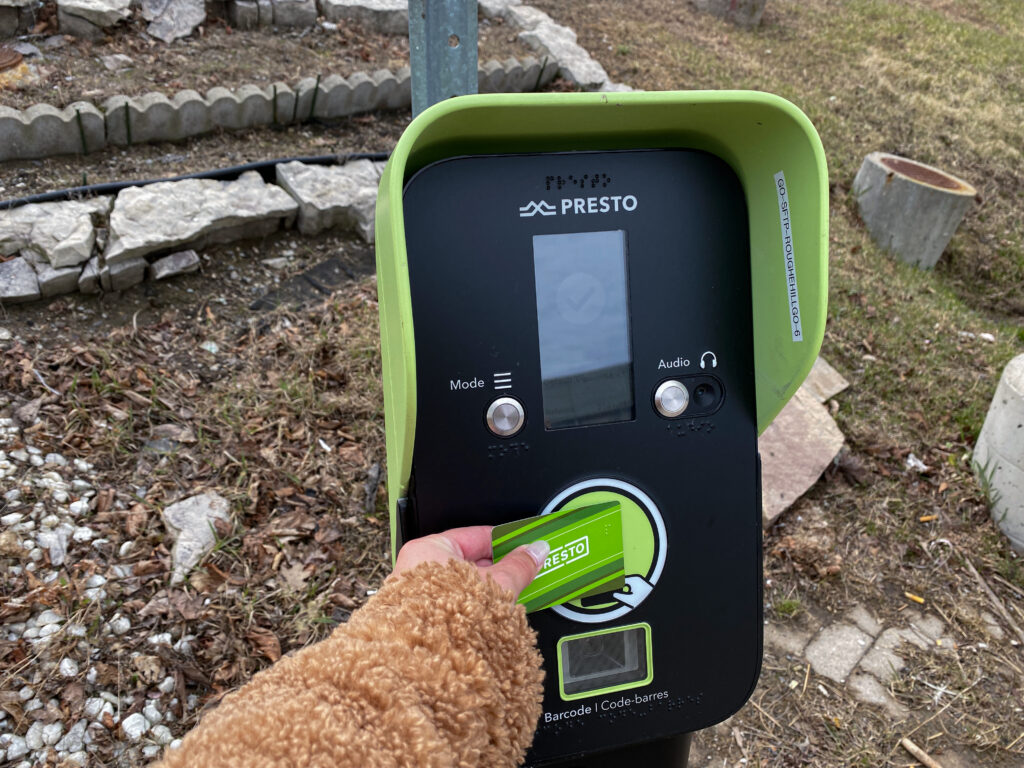
The first thing to do after arriving at Rouge Hill Go Station is to tap a Presto card and pay for the first leg of the trip. (Katie Newman/On The Record) 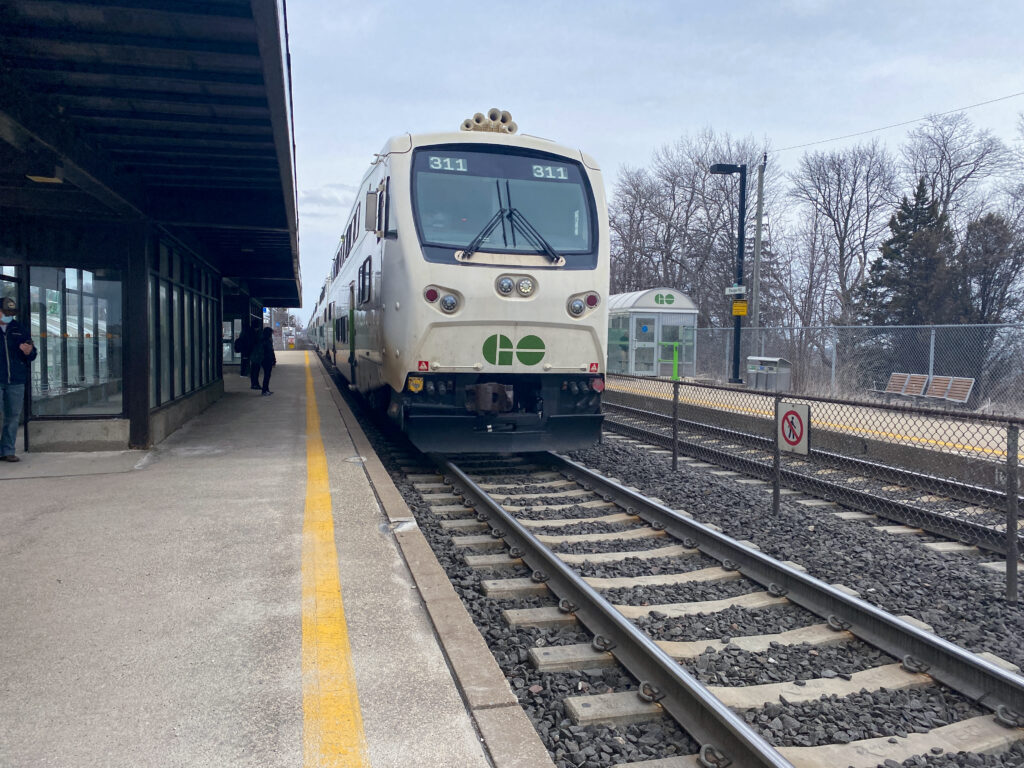
The train pulls into Rouge Hill Go Station at 11:34 a.m. It’s mostly occupied by students making their way to classes downtown. (Katie Newman/On The Record) 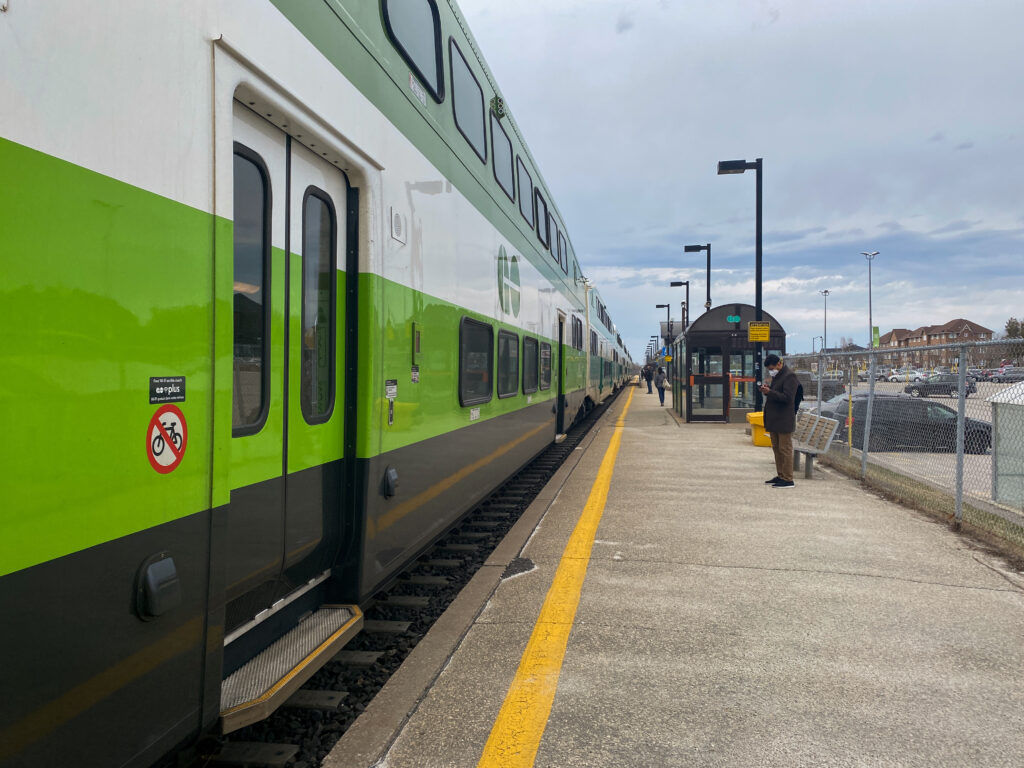
Not many commuters catch the later morning trains, so the platform at Rouge Hill Go Station is fairly empty. (Katie Newman/On The Record) 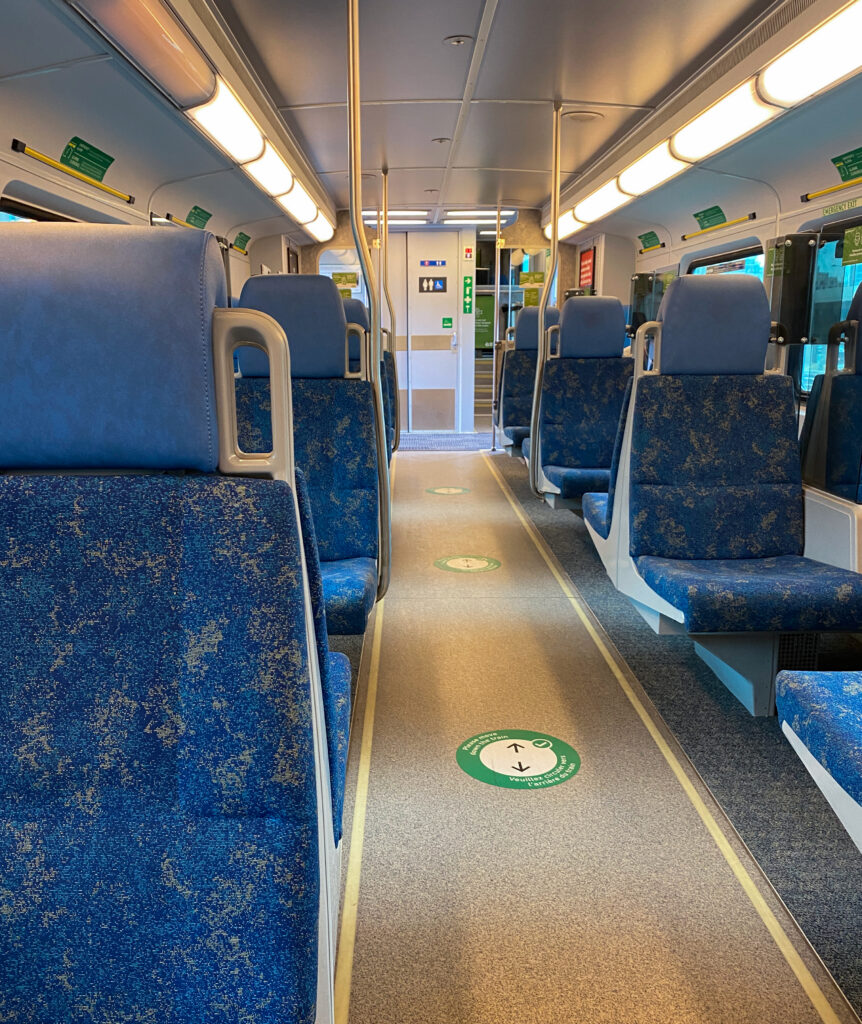
Since the COVID-19 pandemic, more commuters have decided to work at home. This is reflected by the empty GO train seats. Most now sit one person per four-seat cubicle. (Katie Newman/On The Record) 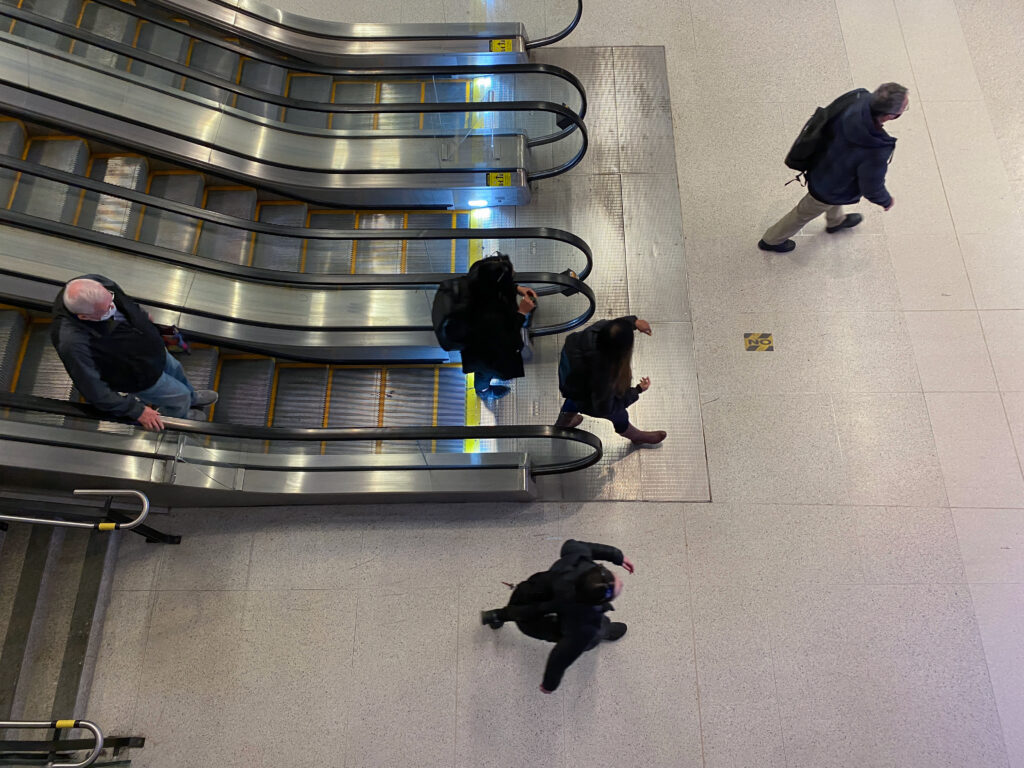
People taking a GO train arrive at the newly renovated Union Station. There aren’t many people at the station, since many commuters are opting to work from home after the COVID-19 pandemic. (Katie Newman/On The Record) 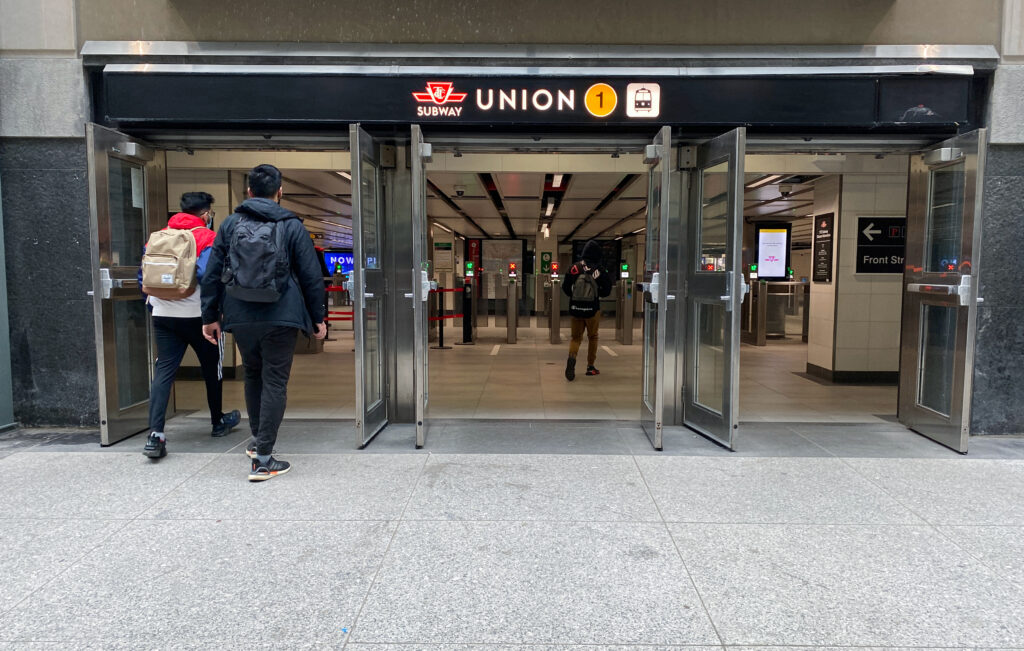
Commuters don’t have to leave the building when transferring from their GO train to the TTC lines at Union Station in Toronto. (Katie Newman/On The Record) 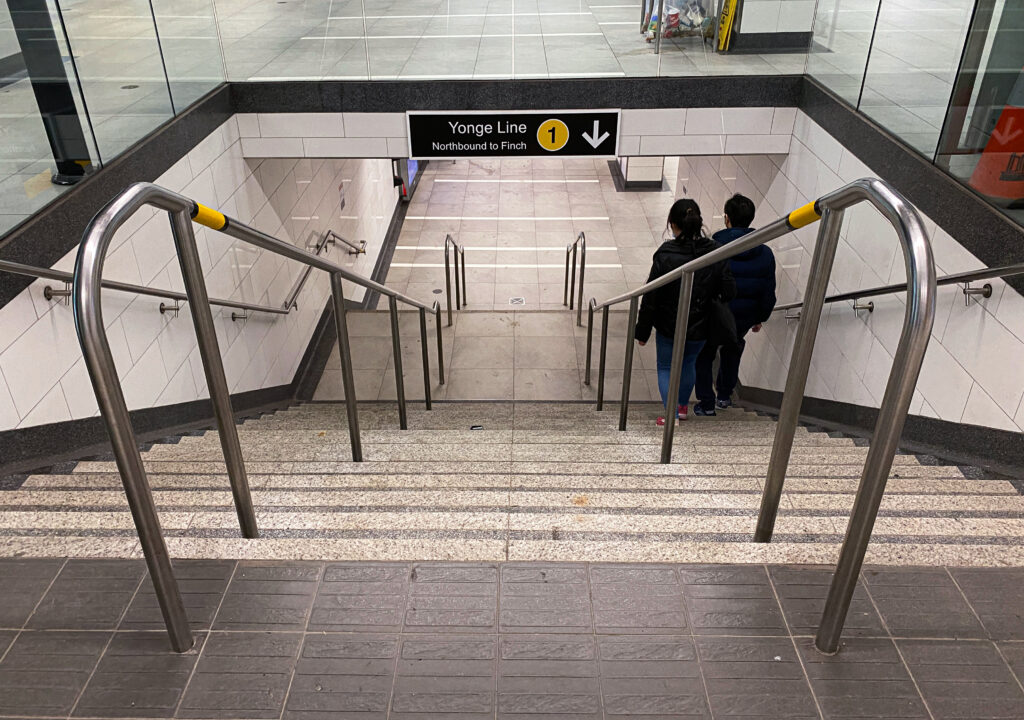
Students at Ryerson take the Yonge line north from Union Station to get to campus. (Katie Newman/On The Record) 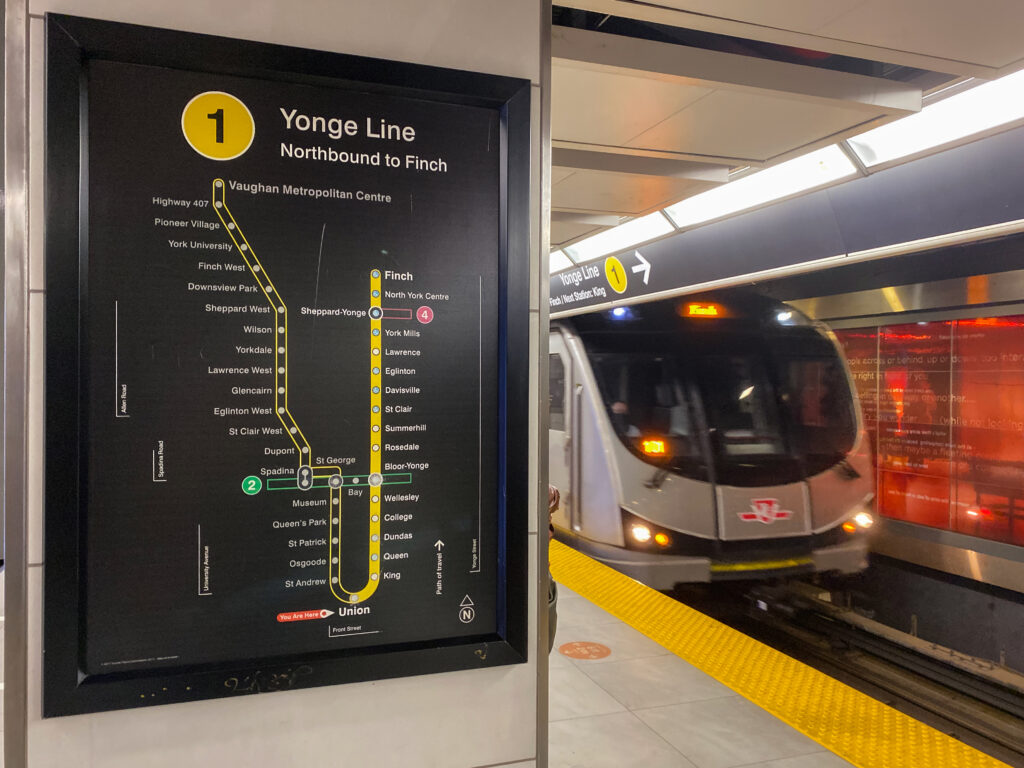
TTC trains on the Yonge line arrive at Union Station every three to five minutes. (Katie Newman/On The Record) 
People exiting from Dundas Station take the stairs up to Yonge-Dundas Square. They arrive in the heart of downtown Toronto. (Katie Newman/On The Record) 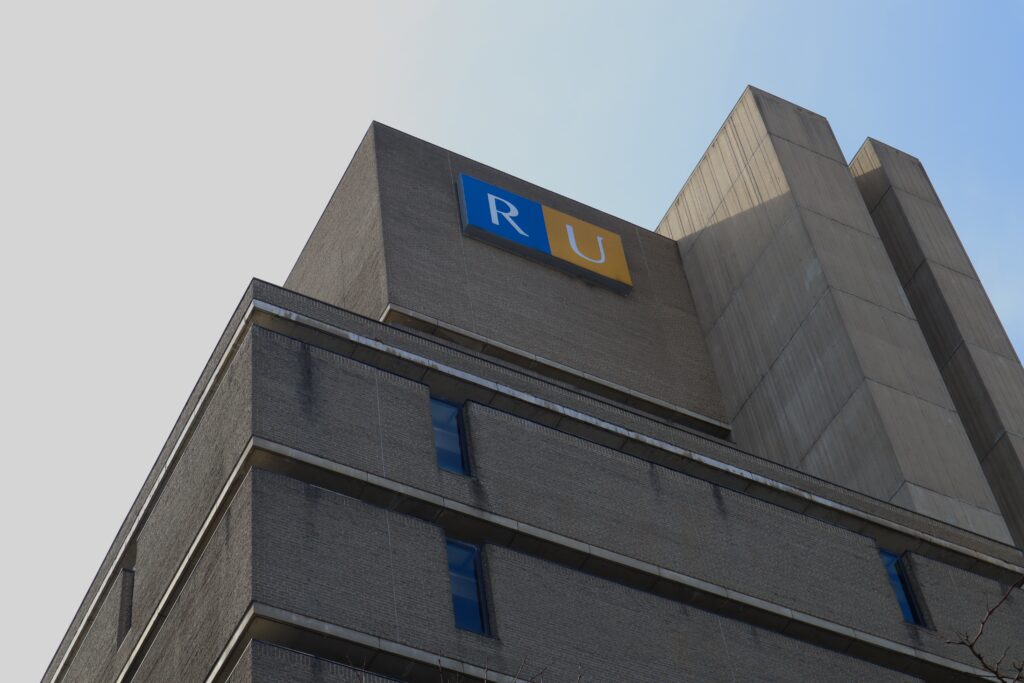
Many students from Ryerson University are commuters who live in the Greater Toronto Area. They take many different forms of public transit to get to class everyday. (Katie Newman/On The Record)
Katie Newman was a reporter with On The Record during the Winter 2022 term.