
Listen to the whole story here:
Toronto bars are benefiting from the extended hours of alcohol service after city council passed a motion last week allowing sales to begin at 6 a.m. during the Olympic Games.
While the move is intended to support local business sales and Olympic viewership, according to the motion introduced by Mayor Olivia Chow, it also prompts broader conversations about drinking culture and the role alcohol plays in everyday life.
Toronto council approved Chow’s motion, allowing alcohol service to begin at 6 a.m. between Feb. 5, and Feb. 22, to coincide with the Olympic Games. The move, which is permitted under the Liquor Licence and Control Act, was supported by hospitality industry groups, including the Ontario Restaurant Hotel & Motel Association.
For some bars, the change has turned what is typically a quiet hour, extended into a space for communal viewing.
DROM Taberna plans to open at 6 a.m. on weekends during the Olympics, said manager Misha Artebyakin, who described the extended hours as an opportunity to offer amenities like food service, staff supervision, and a safe consistent viewing experience for customers.
“If they get the chance to go to a place that does have proper security, does have a kitchen operating, a proper bar, people that actually are going to keep an eye on them… I think that’s definitely going to bring in new faces,” he said.
However, sober coach and alcohol culture educator Amy C. Willis said she’s concerned about the government’s decision to loosen restrictions on alcohol accessibility. She said it’s very important how the government is framing this policy.
“This policy really exists under the guise of supporting small businesses, community connection, Olympic celebration, and really kind of capitalizing off of that excitement. And it’s really important to sort of zoom out and look at the public health implications of that,” said Willis.
The Centre for Addiction and Mental Health (CAMH) shows self-reported mental and physical health has been worsening among adults since the pandemic, when alcohol became more accessible due to policies regarding take-out and delivery. These relaxed regulations, said Willis, were meant to be temporary during the COVID-19 pandemic but are still in effect today.
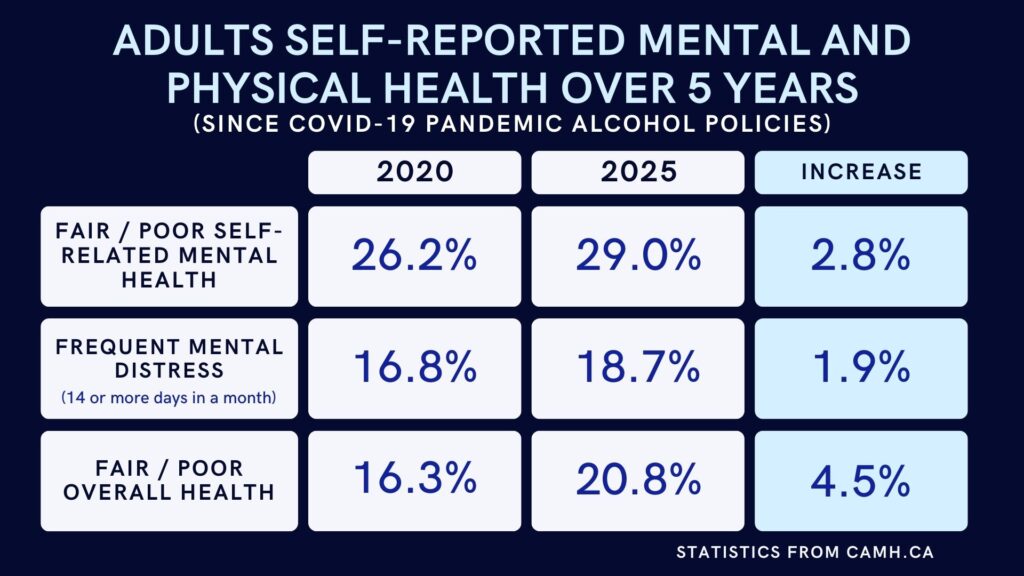
Policies like Toronto allowing early booze sales can reinforce how deeply alcohol is embedded in everyday life, Willis said.
“Culture shapes behaviour long before individual choice does,” she said. “With alcohol being everywhere, opting out then feels a lot harder, especially for people trying to change their relationship with alcohol.”
Sean Woolf, manager of W Burger Bar, said they also plan to open early for highlight events of the Olympics. While some are concerned about the normalization of day drinking, he said the government just wants to give the opportunity for bars to bring in more people.
He said he’s not so worried about long-term impacts.
“They’re just extending the hours. But I don’t think it’s going to change people’s lifestyles in any way. I really don’t think it’s going to be a huge draw for people to come and drink at six in the morning,” he said.
W Burger Bar, doesn’t plan on opening at 6 a.m., Woolf said, because he and his team doubts that many customers will show up before dawn due to jobs, school and sleep.
“I think the only day is going to be that Sunday final hockey,” Woolf said. “If Canada is in the tournament, we’ll open early … we’ll serve eggs and bacon and toast and coffee, and then, because we’re allowed to serve alcohol, we’ll have the full bar available as well.”
Willis supports separating social connection from alcohol use. She said people who want to watch the games don’t need to go to bars or pubs — especially earlier in the day. Willis said they could watch at cafes, another type of local businesses that could benefit from providing a space for the community to watch the Olympics together.
“Celebration doesn’t have to equal drinking, right?” She said.
“The things that really make gatherings appealing to us is a shared experience, is togetherness, it’s the ritual aspect of it… So I think challenging the idea that alcohol needs to be involved in celebration and connection and community is really, really important.”


otter.ai was used to transcribe the interviews in this story.