
Listen to the whole story here:
March marks Endometriosis Awareness Month in Canada, a period focused on the chronic condition that affects 1 in 10 people in Canada, many of whom are undiagnosed and have limited access to treatment due to a decade-long diagnosis backlog, according to The Endometriosis Network Canada.
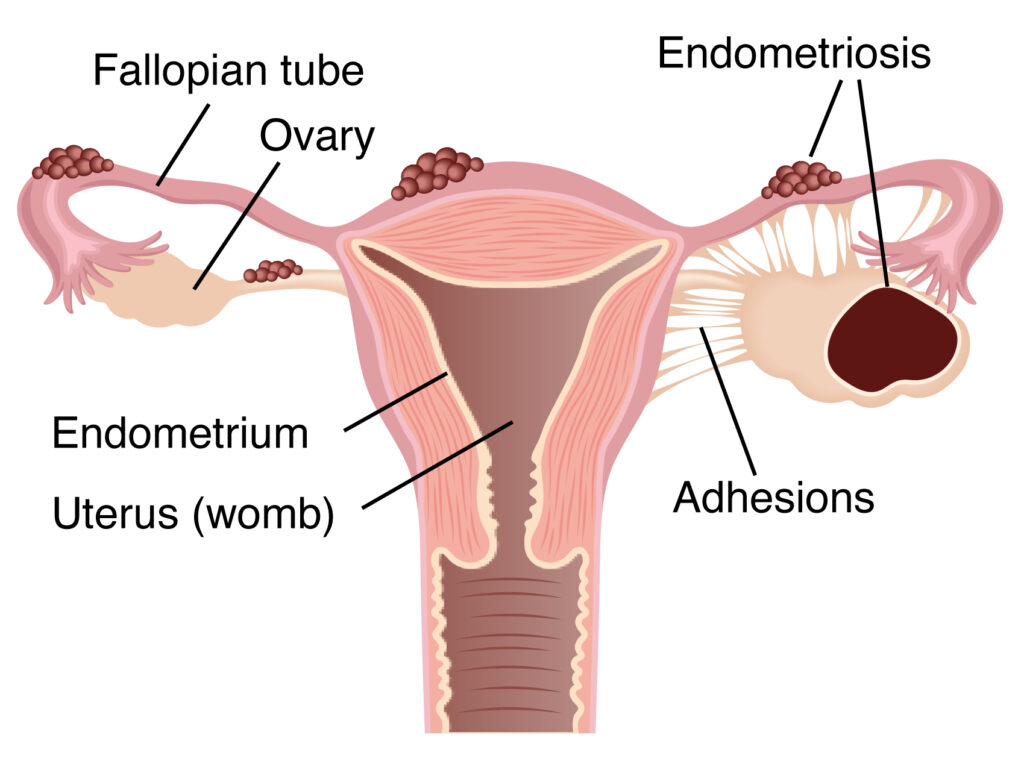
Affecting approximately 10 per cent of women and individuals assigned female at birth worldwide, endometriosis occurs when tissue similar to the uterine lining grows outside the uterus, causing chronic inflammation, internal bleeding, and organ damage. This misplaced tissue responds to hormonal cycles and has no way to exit the body, leading to internal bleeding, inflammation, and the formation of debilitating scar tissue. For many, the result is chronic pelvic pain that can feel like barbed wire inside the abdomen.
Emily Grazia, a student studying at the University of Toronto (UofT) was diagnosed with endometriosis at 17 after waiting over four years to see a specialist to treat her thyroid issues.
“It’s frustrating that access to any medical care in Canada would take that long in the first place,” said Grazia.
Despite its prevalence, the medical community continues to struggle with the timely identification of the disease. The average time to receive a diagnosis has climbed to nine years and four months in Canada, and between eight and ten years in other parts of the world, including the United States and the United Kingdom. This leaves patients to manage debilitating symptoms without clinical support during their most formative years.
Dafna Sussman’s research focuses on endometriosis and disease prognostication. “Unfortunately, the way the health-care field has been structured, chronic illnesses, especially those that affect women, are so easily pushed to the bottom of the priority list because the chance of death is so low,” said Sussman, assistant professor at Toronto Metropolitan University (TMU).
The delay in diagnosis is a byproduct of history, according to Women’s Health Collective Canada. For decades, medical research was conducted almost exclusively on male subjects, leading to a male-as-default model of health according to Northwell Health, a nonprofit health provider.
When women present with pain, numerous studies around the world have shown they are statistically less likely to be taken seriously than male patients. This is because, according to the Endometriosis Network, only about 25 per cent of family doctors can identify endometriosis, and in clinical settings, female-coded pain is often dismissed as psychosomatic or normal menstrual discomfort. Symptoms like bloating, fatigue, and bowel pain often lead doctors to suspect irritable bowel syndrome (IBS) or bladder infections first according to the Endometriosis Network of Canada.
Patients like Grazia say enough is enough and are determined to see change in their clinics and hospitals.
“Just because a disease is chronic doesn’t mean there’s room to wait… [Endometriosis] has run in my family on my mom’s side forever, and neither my mom nor her mom were able to get a timely diagnosis,” said Grazia.
Until very recently, according to the Society of Obstetricians and Gynaecologists of Canada (SOGC), a definitive diagnosis required laparoscopic surgery, an invasive procedure that many patients and doctors are hesitant to pursue early on. Many general practitioners receiveminimal training on the varied presentations of the disease, meaning they may not recognize it until it has reached advanced stages.

In producing this story we used Google Gemini to help organize our points and ideas for an outline.
