
AI disclosure statement: No AI tools were used in the production of this piece.
Listen to the whole story here:
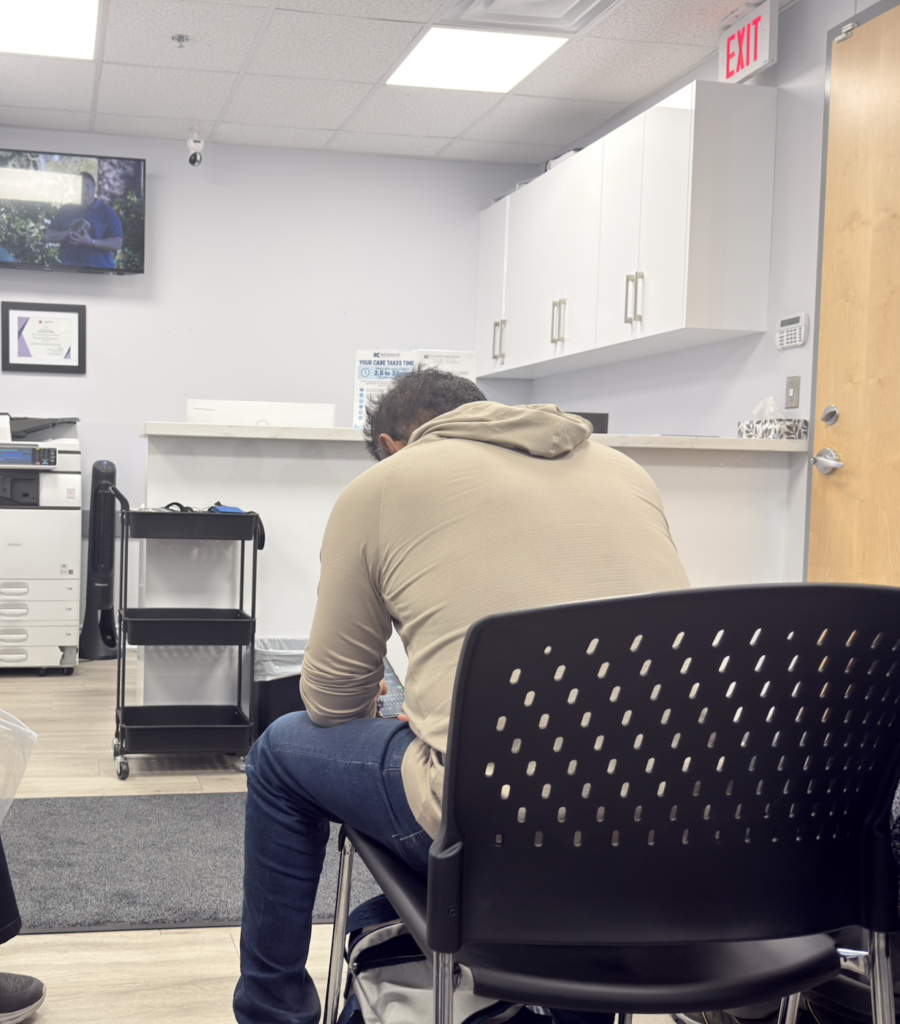
Half of respondents in a national Leger poll released Oct. 29 said they sometimes avoid going to a hospital or seeing a doctor because they doubt they will get timely treatment. Fifty-nine per cent of women surveyed said they do so, compared to 41 per cent of men surveyed, according to the survey results.
Joban Kaur says she was bleeding internally when she went to a Brampton hospital in the first week of October 2026. Kaur, who immigrated to Canada, recalls being told to wait and feeling that staff dismissed her concerns.
Dr. Karan Ralhan, a Brampton physician trained in family medicine, said he noticed a change in where some patients sought care after COVID-19 restrictions eased. He said some patients travelled to India for treatment when they had trouble getting care here. Some already had health coverage in Canada, he said.
Four per cent of respondents said they had travelled abroad and paid for private health care to avoid long waits or because they were dissatisfied with public services, according to a separate question in the Leger poll.
Leger surveyed 1,510 adults online from Oct. 16 to 18. Both questions asked about experiences respondents had ever had. The Montreal Economic Institute, SecondStreet.org and the Canadian Constitution Foundation commissioned the poll.
In Newfoundland and Labrador, about one in five OurCare respondents who had a regular provider said they could get a same-day or next-day appointment for an urgent concern, according to the survey’s regional findings. In Mississauga, a local program helps people looking for a regular provider find family doctors and nurse practitioners accepting patients.
Barbara Martin, a patient partner quoted by the Canadian Institute for Health Information, recalled going to emergency after breaking her leg.
“I had to sit in the waiting room for eight hours with a leg dangling,” Martin is quoted as describing in the June CIHI report.
A patient can spend more time in the emergency department even after a doctor decides to admit them. When inpatient beds are full, staff keep caring for patients who are waiting for a bed while assessing new arrivals. Emergency physicians call this bottleneck access block.
“In large urban hospitals, it’s about access block, and wait times can be horrendous,” Dr. Alecs Chochinov, head of emergency medicine at the University of Manitoba, is quoted as saying in CIHI’s report.
Nine in 10 emergency visits that led to hospital admission in 2025–26 were completed within 46.5 hours. The figure covers the full emergency visit, including time spent waiting for a bed, according to the institute’s September data release.
The risk that patients’ conditions will worsen while they wait rises as emergency departments become more crowded, the Canadian Association of Emergency Physicians wrote in its June 2026 position statement. The association also called on governments to set targets for how long admitted patients wait for a hospital bed.
