
AI disclosure statement: No AI tools were used in the production of this piece.
Listen to the whole story here:
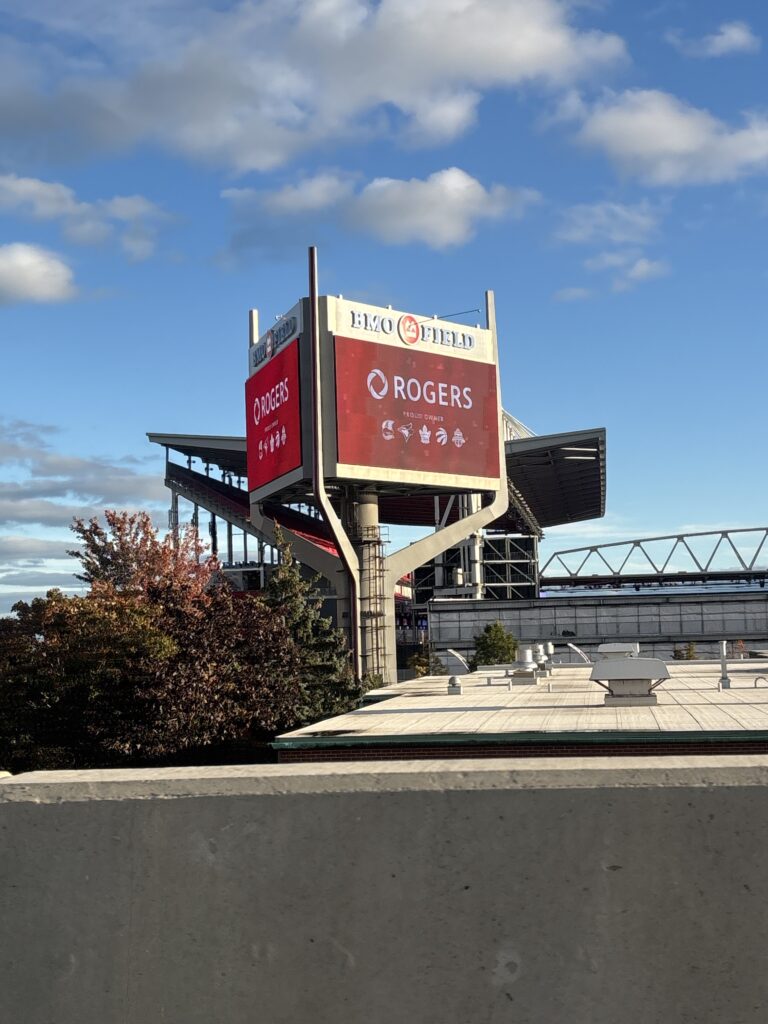
Rogers Sports & Media completed its acquisition of the remaining 25 per cent of Maple Leaf Sports & Entertainment (MLSE) this month, giving the company full ownership of the Maple Leafs, Raptors, Toronto FC and Argonauts. The deal adds to Rogers’ existing ownership of the Blue Jays and Sportsnet.
With control over Toronto’s major professional men’s sports franchises, Rogers’ expanded ownership raises questions about ticket affordability, streaming costs and the future of independent sports coverage.
Russell Field, a professor of socio-cultural studies of sport and physical education at the University of Manitoba, said corporate ownership can create tension between business priorities and fans’ expectations.
“They exist by and large to meet the goals of their shareholders, which are almost invariably greater stock value and larger dividends,” Field said.
He said fans often view their teams as part of their communities, creating a disconnect when ownership prioritizes profitability.
“It creates a distance between fans and the sense of community they feel with their team. There’s a kind of built-in tension there,” Field said.
“The entire reason for Rogers to own these teams is to create live content for its broadcasting arm,” Moshe Lander said, pointing to advertising revenue and opportunities to direct viewers toward Sportsnet.
Lander is a professor of sports economics at Concordia University, and he agreed that Rogers’ acquisition is unlikely to fundamentally change teams’ pricing power, arguing that each franchise already operates with limited direct competition.
One concern is whether Rogers’ expanded control will make following Toronto teams more expensive.
“From the perspective of the consumer, professional hockey, basketball, baseball, and football are already monopolies so there won’t be much change,” David Soberman said.
Soberman, a Canadian National Chair in Strategic Marketing and professor at the University of Toronto’s Rotman School of Management, said the acquisition is unlikely to significantly change the competitive landscape. Soberman went on to say, because professional sports teams already have considerable pricing power within their markets.
However, he expects access to games to become increasingly tied to paid subscriptions. With Rogers owning Sportsnet, the company has an incentive to distribute more games through its own platforms rather than competing networks.
“Many more of the games will be through subscription where you have to pay extra to watch certain games. There will be reduced exposure on networks it does not own and more exposure on its own networks,” Soberman said.
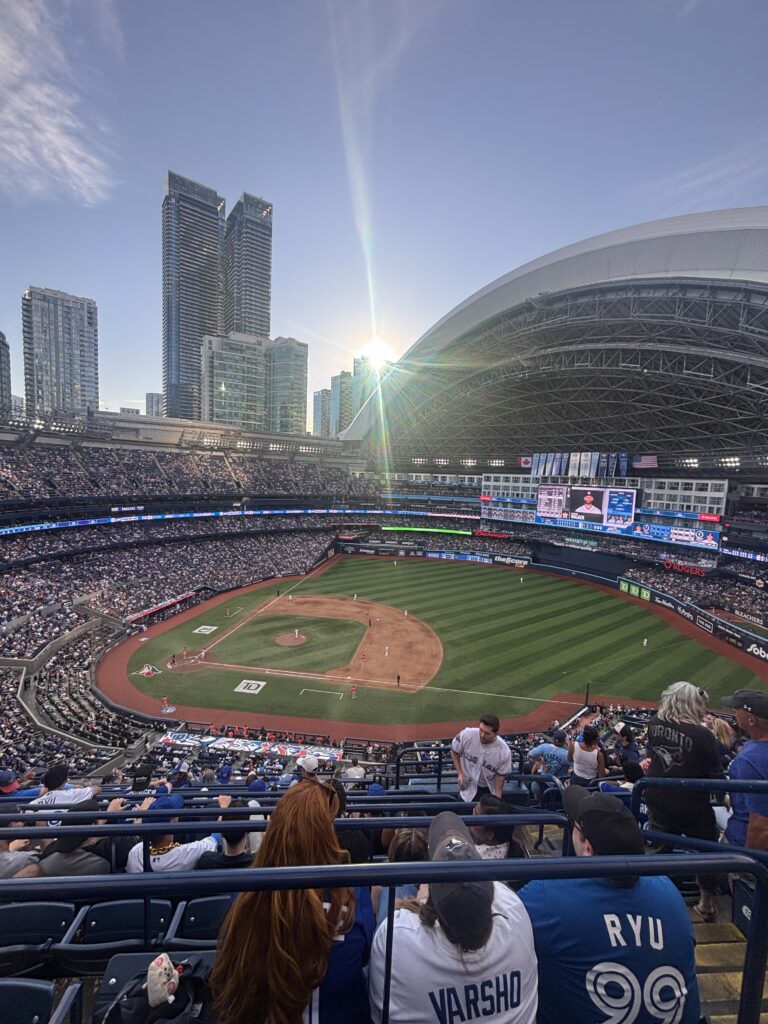
Field also questioned whether concentrated ownership could improve ticket affordability.
“It’s hard to imagine a scenario in which Rogers owning all these properties leads to lower ticket prices,” he said.
Lander said fans priced out of Toronto’s major men’s leagues have other options, including women’s professional sports. Rogers does not own the Toronto Tempo, AFC Toronto or the Toronto Sceptres.
“Toronto should consider itself lucky to have teams in four of the five major professional men’s leagues. Fans are spoiled for choice and the ownership structure should not be a concern,” Lander said.
Beyond affordability, Field raised concerns about the potential impact on critical sports journalism when a company owns both teams and the media outlets covering them.
“Where do the critical voices in the media have a place?” he asked.
Field pointed to what he considers uncritical Blue Jays coverage on Sportsnet and raised concerns about a Leafs podcast he believed was shut down because of critical coverage, though he acknowledged he could not confirm the circumstances.
Ultimately, Rogers’ expanded ownership gives the company significant influence over how Toronto fans watch, attend and discuss their teams. While Soberman anticipates changes in how games are distributed and Lander sees little reason for concern, Field said he worries that corporate consolidation could weaken the connection between teams and their communities.
For fans, the question is whether Rogers’ promise of a better experience will deliver meaningful benefits or make following their favourite teams more difficult.
“We know how much these teams mean to fans and we are fully committed to investing to build championship-calibre teams, to enhancing the fan experience and delivering compelling experiences for our customers,” Rogers president and CEO Tony Staffieri said in a statement announcing the deal.

Reporter, OTR, F2026.
