Listen to the whole story here:
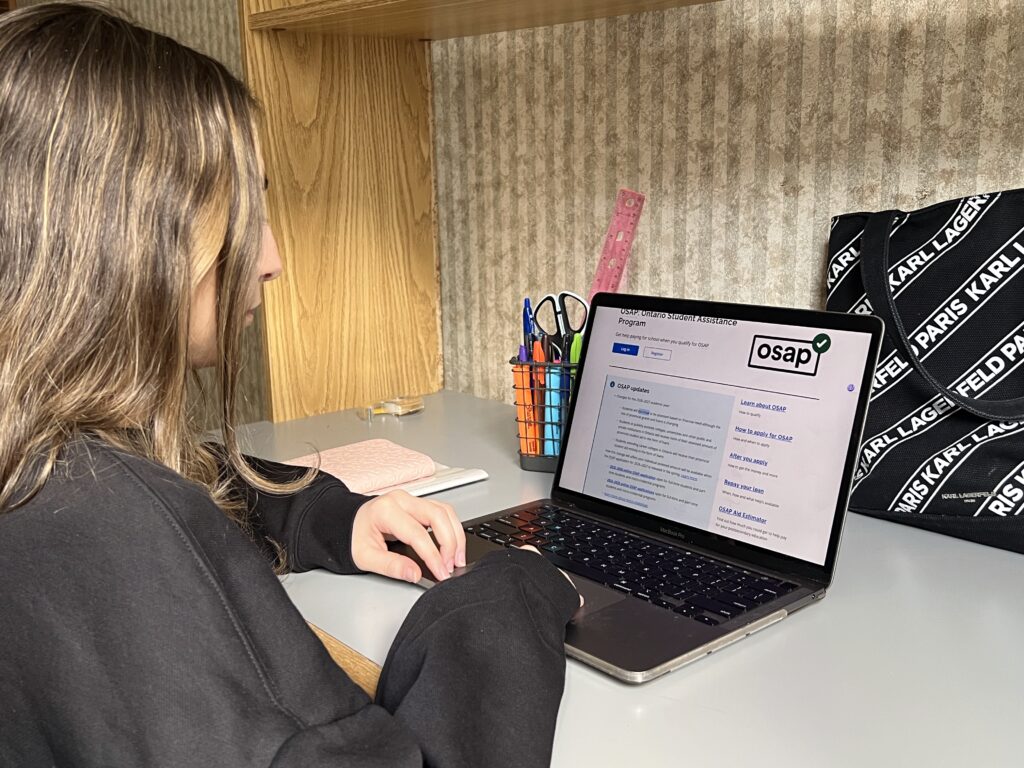
Ontario students are preparing for higher debt after the provincial government announced that the Ontario Student Assistance Program (OSAP) will shift from a mostly grant-based program to a mostly loan-based one starting in fall 2026. Previously, students could receive up to 85 percent of their funding as non-repayable grants and 15 percent as loans. Under the revised model, students will receive only 25 per cent of their funding as grants, with the remaining 75 per cent coming as loans, according to a Government of Ontario news release.
According to the same news release, starting September 2026, publicly funded universities will be allowed to raise tuition by up to two per cent per year for three years, the first increase since a 10 per cent cut in 2019 and the freeze that followed.
A press release from Toronto Metropolitan University (TMU) responding to the announcements reads, “We understand every cent counts for students, and at TMU we will continue to support students’ access to education and will continue to look for ways to find efficiencies.”
“The new funding will provide a partial offset of the impacts created by declining international enrollment due to federal policy changes, several years of frozen tuition, and very constrained government grant levels.”
The province estimates the increase will add about $170 annually to tuition for undergraduate students (a figure also quoted by the TMU press release), keeping Ontario’s tuition among the lowest in Canada, though experts said that even small increases may create additional financial pressure for students.
“Under the new OSAP rules, students will be leaving school burdened with far heavier debt than ever before, facing years of financial strain that could shape their entire future, whether it’s starting a business, pursuing further education, or taking entry-level roles in public service or the arts, because they are uncertain how they will manage repayment while stepping into an already challenging job market,” said André Côté, interim Executive Director of the DAIS think tank at TMU.
Students said they are already feeling the impact of the changes. Some are rethinking their education plans, career goals, and whether they can afford to continue their studies.
“Prioritizing loans over grants is unfair to students and makes pursuing higher education much harder. With more debt, many, especially from lower-income households, will struggle to cover tuition, rent, and living expenses,” said Ava Demelo, first-year English literature student at TMU.
“Taking on more debt after graduation is extremely worrying. With a struggling job market for young people, these OSAP changes add even more financial stress and uncertainty, making it a heavy burden to pay off loans in today’s economy.”
Hajra Farhan, a first-year criminology student at TMU, said, “With these high loans, students face extra pressure, making it almost impossible for many to continue their education. Many students might even have to drop out of university because the financial burden is simply overwhelming.”
“If the government truly wants to support education, they need to increase grants and ensure those who need help the most get it, taking students’ backgrounds and family circumstances into account,” said Farhan.
Côté added, “These OSAP changes are forcing students to rethink their career paths, making decisions based more on affordability than passion.”
“Students who belong to middle- and low-income families, who rely heavily on OSAP for tuition, rent, and daily living costs, will carry the heaviest burden. Many are being pushed away from higher-cost fields like medicine or engineering, limiting their career options and reshaping their educational dreams, while also increasing stress and affecting their overall well-being,” said Côté.

Saba Iqbal is a fourth-year journalism student and a storyteller for, <i>On The Record</i>, winter 2026.
Saba Iqbal is a fourth-year journalism student and a storyteller for, <i>On The Record</i>, winter 2026.
Saba Iqbal is a fourth-year journalism student and a storyteller for, <i>On The Record</i>, winter 2026.