Listen to the whole story here:
Average rents across Canada have hit their lowest point in two years, according to a new report from Rentals.ca. The monthly report, done in collaboration with Urbanation, analyzed rents across Canada and found that average rents have fallen to $2,057. In Toronto, rents continued to decline this year as slightly smaller apartments and more available units eased pressure on the market, which caused a 7.2 per cent drop compared to January 2025.
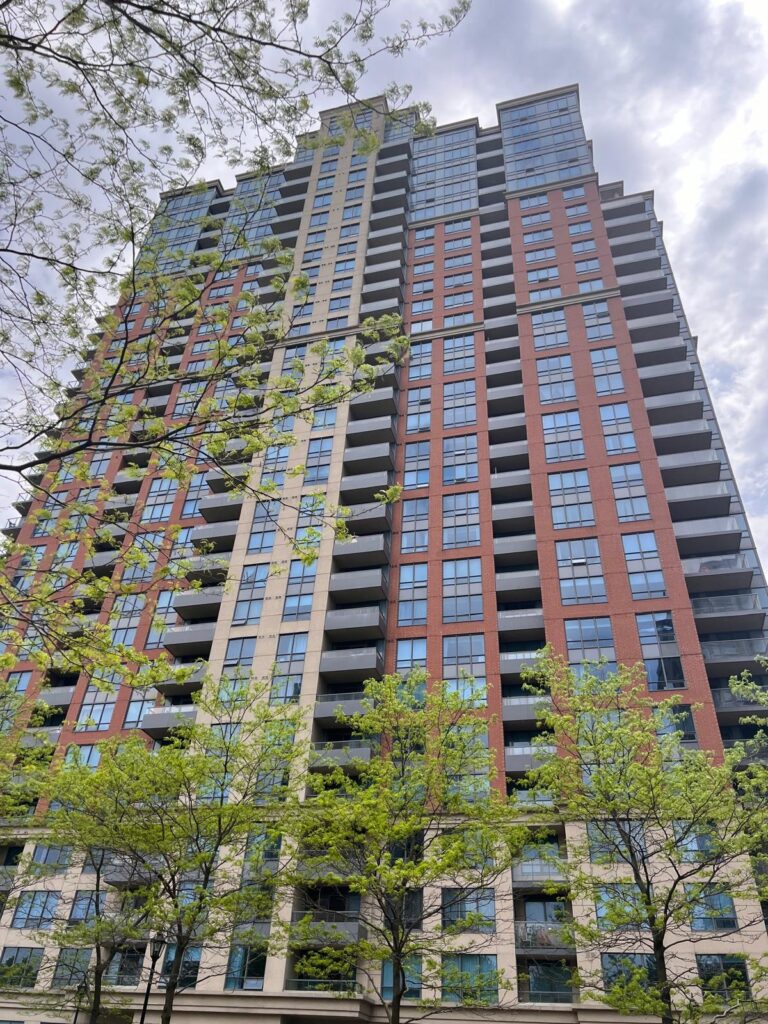
According to recent data from Urbanation, a record-high number of condo units were completed in 2025, nearly 29,300 across the Greater Toronto and Hamilton Area. (GTHA). Urbanation also says that completions are expected to drop to around 22,000 in 2026, and many of the newly built condos are now on the market and available for rent.
But renters and experts say the decline is unlikely to ease pressure on renters’ monthly budgets, as tenants are often paying nearly the same amount for smaller units in a still-competitive downtown market.
Nemoy Lewis, a professor of housing and labour markets at Toronto Metropolitan University (TMU), says the new condo units have increased supply.
“The recent dip in rents doesn’t mean housing has become more affordable. Many units are built for investor returns, not long-term social need, and renters face hidden costs like deposits, furnishing, commuting, and the risk of displacement, which keeps housing out of reach for those who need it most,” said Lewis.
“A wave of condo completions that were planned years ago, combined with a cooling sales market, has redirected some units into rentals,” said Lewis. He emphasized that this doesn’t mean housing has become more affordable.
“Even with some rents coming down, housing is still very expensive, and most of the new units are designed for investors, not low- or moderate-income households,” said Lewis.
According to Rentals.ca, overall rents in Toronto have gone down, with two-bedroom apartments dropping the most, to an average of $2,826/month. Shared accommodations are averaging $1,167/month.
Despite the drop in rents and the construction of new condos and rental apartments, many students still struggle with high housing costs.
“Rents are still high, even with the recent surge of condos in the city,” said Khushi Dunbury, a third-year global business management student at TMU.
“I am not sure these new developments will make a real difference in the long run, but some immigrants are leaving, so rents might ease for now, but if more people move in, prices could go up again,” said Dunbury.
“In many neighborhoods, people are being pushed out so older buildings can be torn down and turned into condos, driving up costs for everyone,” said Daoud Khan, a second-year economics student at TMU.
“I haven’t come across many new rental options, and with prices fluctuating so much, finding a suitable place in the city is really challenging,” said Khan.
Divyot Singh, a third-year computer science student at TMU, says there is a noticeable gap between available properties and people looking for them, especially in downtown Toronto.
“The fluctuation in rent seems tied to the supply and demand of condos. As more properties enter the market, renters have slightly more options, which helps push prices down,” said Singh.
Harshit Yadave, a third-year computer science student at TMU, says the recent supply of condos offers little comfort for those struggling with high rents in Toronto.
“With more condos being built and rented out, renters now have more choices as compared to last year. Housing has become a bit more manageable for students, and that is pushing rents down,” said Yadave.
“Because landlords now have more units to rent out, I think strict rental procedures, like extensive background checks and large deposits, have started easing,” said Yadave.
The average rent in Toronto is now around $2,500, per the Rentals.ca report, which, while still high compared with other Canadian cities, is down from peak rents of over $3,000 seen in previous years.
Lewis cautioned that this relief is likely only temporary.
“Once the sales market rebounds, many of these units will move back into speculative circulation, and rental pressure will likely return, so real long-term affordability will only come from treating housing as essential social infrastructure, not as a speculative asset,” said Lewis.

Saba Iqbal is a fourth-year journalism student and a storyteller for, <i>On The Record</i>, winter 2026.
Used Grammerly for Grammer and Spell check