
AI disclosure statement: AI was used to transcribe the audio interviews.
Listen to the whole story here:
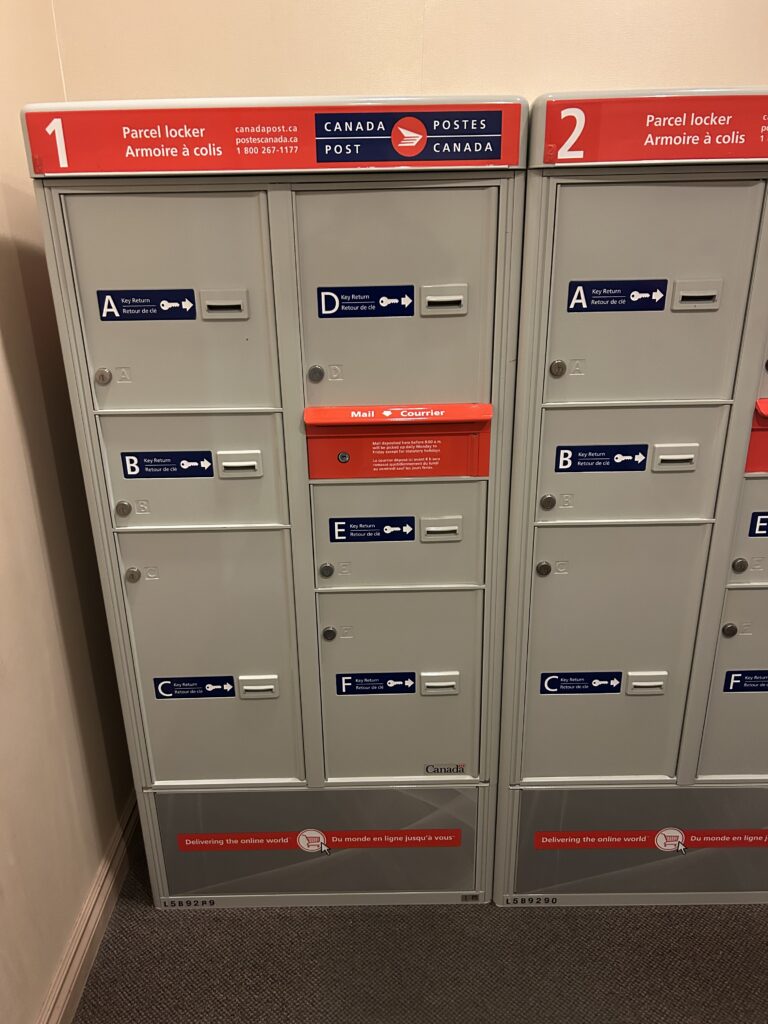
Canada Post will be replacing its door-to-door mail delivery with community mailboxes in parts of Etobicoke, Mississauga and Brampton starting this month, as part of the 4 million addresses nationwide that will lose this service in the next five years. The move, announced in September by Joël Lightbound, Minister of Government Transformation, Public Works and Procurement, has sparked concern around accessibility, convenience and what the future of postal services will look like.
The changes are expected to begin in parts of Etobicoke in November 2026, followed by Mississauga and Brampton in 2027. The Crown corporation looks to reduce costs amid declining letter mail volumes and a rise in financial losses.Nearly 75 per cent of Canadian households are already served by centralized mailboxes rather than door-to-door service.
Although some residents in affected areas believe that these changes are necessary as more services are moving online, others are concerned that this change could affect seniors, people with disabilities and neighbourhoods that are not designed to accommodate community mailboxes.
Zak Haj-Ahmad, a Mississauga resident since 2021, said that he had not received any notifications from Canada Post regarding their changes. He said that he first learned about the plans during an interview.
“I was a bit surprised, but after thinking about it a bit more, I think it makes sense because most people do not use snail mail these days and everything we do is online,” Haj-Ahmad said.
Haj-Ahmad explained that most of his bills and important documents are all already available to him electronically, which makes traditional mail not as important to his daily life.
“I mean, it would be a relatively minor nuisance if I’m having to go there and go out of my way to pick things up from the community mailbox,” Haj-Ahmad said.
Haj-Ahmad expressed concerns about residents who may not find the transition as manageable.
“There are a lot of seniors in our community, and getting out for them will be challenging,” he said.
He also said that harsh winter conditions are a potential obstacle for residents that would need to travel to collect their mail.
“And so if there is important mail that you are expecting, that can definitely be a challenge to access in situations like that,” he said.
Haj-Ahmad said he believes that Canada Post should contact and consult vulnerable residents before implementing these changes.
“I would say I want Canada Post to know that their cost-saving strategies come with unintended consequences for the most vulnerable people in our communities,” he said.
Toronto Councillor Stephen Holyday, who represents Etobicoke Centre, said he was initially disappointed by the announced changes.
“The first was disappointment in the reduction of service, and the second is concern over the complexities of what it will take to locate community mailboxes,” Holyday said.
Although the earliest Etobicoke conversions are expected in Etobicoke North, Holyday said he is concerned about the implications for other neighbourhoods as the transition expands.
Holyday explained how community mailbox installations could create problems that involve parking, traffic, litter and placement near residential properties.
“It should not be a surprise that many local residents will be concerned if an entity is deciding to or is attempting to locate a piece of infrastructure or equipment in front of their home, adjacent to their home on their street,” he said.
Holyday also emphasized the importance of physical mail in allowing residents to participate in local government decisions.
“I will add that in my view, mail, physical mail, is an essential part of democracy, at least from the perspective of my work,” he said.
He said that notices about planning applications and proposed neighbourhood developments are often delivered through traditional mail.
“And people’s ability to participate in that process often hinges on notifications,” he said.
Holyday said he is worried that requiring residents to collect their mail from another location could potentially delay their access to important information.
While also acknowledging Canada Post’s financial challenges, Holyday said that the corporation and federal government must take responsibility for the reduction in service.
“To me, it is a service level reduction, and they have to take responsibility for that,” he said.
Ian Lee, an associate professor at Carleton University’s Sprott School of Business who has studied Canada Post’s operations for decades, said the shift away from door-to-door delivery began long before the current financial challenges.
According to Lee, Canada Post began to introduce community mailboxes in new suburban developments in 1986 to reduce the cost of delivering mail to individual homes.
“So the original motivation in 1986 was to try to reduce their cost structure for the most expensive part of their operation, which was delivery to the door, to the residential door,” said Lee.
He explained that the transition continued for decades before plans to eliminate remaining home delivery were halted following the 2015 federal election.
Lee said the decline in traditional letters has significantly weakened Canada Post’s business model.
“The very business foundation of Canada Post was disappearing underneath their feet,” he said.
According to Canada Post’s 2025 annual report, domestic letter mail volumes have declined by approximately 62 per cent since 2006. The corporation reported a $1.57-billion loss before tax in 2025.
Lee said that reducing expensive delivery operations is essential to keeping Canada Post financially sustainable.
“Oh, it is absolutely essential,” said Lee when asked whether the transition was necessary for the corporation’s long-term survival.
Lee argued that Canada Post should increasingly shift its focus towards parcels and e-commerce to remain competitive.
“It is going to be a much smaller Canada Post focused on parcels,” said Lee.
Despite the financial arguments, Holyday said his priority is ensuring community mailboxes are installed in locations that minimize disruption and are convenient for all residents.
He said that Toronto City Council can raise concerns with Canada Post, although the corporation ultimately makes decisions about its delivery model.
“My focus is on where those community mailboxes end up, understanding that the decision is within their control,” Holyday said.
For Haj-Ahmad, the transition is more than just the inconvenience; he believes that Canada Post must consider those who could be affected more significantly.
“And again, I think about my elderly neighbours who will probably be impacted a lot more than I would,” he said. “So I just hope that Canada Post knows that they need to engage with those communities and make sure they are addressing the concerns that people will have before making these changes.”
Canada Post has a Delivery Accommodation Program for people with disabilities that face difficulties accessing their mail, however, March of Dimes Canada raised concerns regarding the program in an open letter to Canada Post on April 20 of this year.
The disability advocacy organization called for an easier application process, clearer eligibility requirements, and guaranteed door-to-door delivery services for people who are not able to safely access community mailboxes.
The letter urged Canada Post to address concerns about applicants having to prove their disability and to make sure that community mailbox locations are accessible, especially during the winter months.
