
AI disclosure statement: No AI tools were used in the production of this piece.
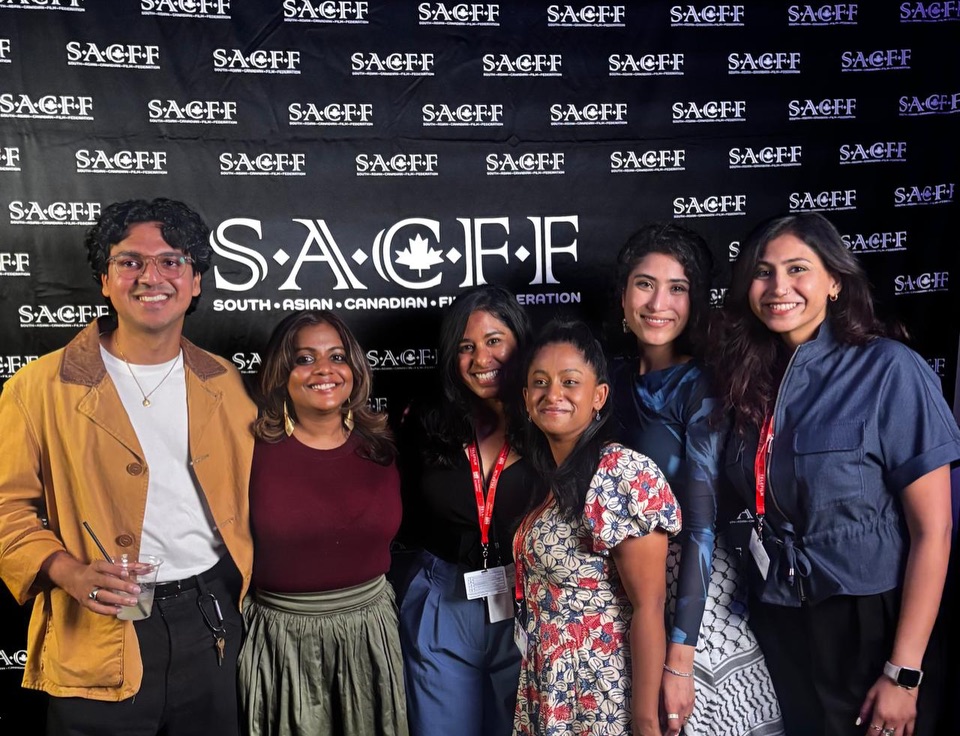
Standing before a South Asian Canadian Film Federation (SACFF) backdrop during this year’s TIFF, actor and producer Sayani Gupta described the Canada-India Co-Production Lab as more than a networking event.
“I call it the class,” Gupta said in an on-camera interview. She said the other participants were talented and welcoming, and that she expected to learn from them.
Gupta brought Tongue, a fantasy-horror feature in development, to the event. Although it was not an official TIFF screening selection, it was one of the projects using festival week to seek the partners and resources required before a film reaches production: producers, financing, sales and distribution.
That distinction—between being visible at TIFF and leaving with a viable path forward—became more consequential this year with the launch of TIFF: The Market, the festival’s first official content marketplace.
SACFF and ProducerLAND’s lab paired six Canadian producers with six Indian producers for pitch preparation and cross-border collaboration. Participants included Gupta with Tongue, Teenaa Kaur with Carpool, Rahul Chaturvedi with TAPAATAP and Priyanka Desai with Zindabad.
Kaur said her goal for Carpool is to reach audiences in both countries.
“The stories are so relatable,” she said in a separate on-camera interview. Kaur said shared cultural and linguistic connections could help films travel between India and Canada instead of remaining confined to one market.
The gathering also included artists whose work had already crossed from development to a TIFF screen. Mandeep Sodhi, the lead actor who plays the son in Ian Bawa’s Strong Son, described the film as a story about a former bodybuilder who becomes his father’s caregiver. The two men discover how differently they have grown while trying to live together.
“Visibility is equal to opportunity,” Sodhi said in an on-camera interview.
For the producers, those needs are concrete. Chaturvedi has described TAPAATAP as an eight-part, Mumbai-set table-tennis drama. In a pre-TIFF interview with REELway, he said: “The finance plan draws on Canadian TV funding, and needs an Indian co-producer bringing equity and ideally a streamer relationship for a pre-sale.”
Desai identified another obstacle in a separate REELway interview.
“Canadian producers often see India only through a Bollywood lens, and Indian producers often see Canada only as a funding source or a diaspora market,” she said.
SACFF’s public material says participants received training, mentorship and market access. It does not report how many buyer or financier meetings occurred, how many scripts or budgets were requested, or whether any producer attachments, letters of interest or negotiations resulted.
Because these projects remain in development, measurable outcomes may take months to become public. Those outcomes will determine whether the initiative created lasting access or only a temporary moment of visibility.
For Gupta and Kaur, TIFF provided a room in which to introduce their projects. The next test comes after the festival: who returns their calls, who requests their material and whether any conversation becomes a contract.

Reporter, OTR, F2026.
