
AI disclosure statement: AI was used to transcribe interview audio files, and Grammarly was used for spell-check and grammar-related errors.
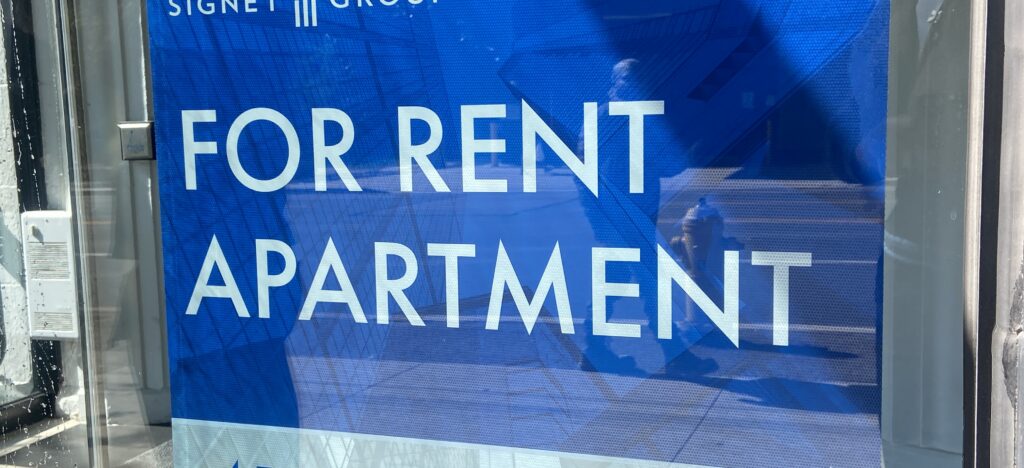
On Monday, the second wave of amendments to the Residential Tenancies Act (RTA) officially take effect across the province. Under the new rules, a landlord’s notice for unpaid rent can take effect as early as the seventh day after it’s given, rather than the 14 days previously required, allowing landlords to apply to evict sooner.
Bill 60, the Fighting Delays, Building Faster Act, 2025, is an omnibus bill that covers everything from transit and construction to utilities. In a press release from the Ministry of Municipal Affairs and Housing, Attorney General of Ontario, Doug Downey, said that the changes to the RTA is “just the latest step in our plan to protect Ontario and help balance the rights and responsibilities of landlords and tenants.”
“Their rent may be due on the first, but their OSAP, paycheque, or support from family doesn’t necessarily arrive on the first,” Prentiss Dantzler, a professor in the department of sociology and founding director of the housing justice lab at the University of Toronto said in an emailed response to OTR. He said the shorter timeline overlooks how students actually get paid, “So, shortening the timeline doesn’t solve that mismatch. It just moves someone experiencing a temporary cash-flow problem into the eviction process faster.”
When the bill was introduced in 2025, all 43 NDP MPPs voted unanimously against it, arguing that it would only erode tenant protections.
“The Landlord and Tenant Board is an absolute mess, with record-high lineups and backlogs,” said MPP Kristyn Wong-Tam Wong-Tam said that the Landlord and Tenant Board was originally designed so that disputes can be addressed quickly, more effectively and inexpensively, but that has not been the case.
Wong-Tam said that this new rule may clear the backlog, but not in the right way.
“This speeds things up, of course, for the pathway to eviction for tenants, which is not what the system needed,” said Wong-Tam. “Any tightening of the rules that will advantage landlords disadvantages tenants.”
For students at Toronto Metropolitan University (TMU), the shorter window raises practical concerns.
Lisa Larionova is a fourth-year social work student at TMU. A lot of things need to line up in order for her to be able to pay rent without having to dip into her savings. She works and gets paid by paycheck; she receives OSAP, including a guaranteed set amount because she has a disability.
Most people, including her, are paid every two weeks, she explains, so a seven-day window wouldn’t give tenants enough time to pull the money together.
“There could be a delay in verification of my classes or in my enrollment,” Larionova said. “There could also be a delay in the system that I get paid through, especially because sometimes technology is so unreliable.”
She adds that fairness should be granted to both sides.
“Yes, landlords need security and fairness, but do the tenants not also need that? If we’re talking about fairness, it should be fair for both sides,” said Larionova. “This change is not fair for someone who is facing hardship.”
“I definitely am a little shaky when it comes to dealing with landlords. It’s hard to trust a new one,” said Yassin El-Ashi, a second-year student at TMU. He lives with his sister, which helps ease the financial burden of living downtown. The two switch properties every year and have had three different landlords since starting school.
“My little experience has helped me, especially after having a bad landlord.”
El-Ashi pays his rent on time every month, but that does not mean the process is always straightforward.
“Bad landlords usually have a problem with communication,” said El-Ashi. “Sometimes landlords can pressure us to pay earlier… It’s mostly only a few days earlier. They say that they have bills to pay, but it’s not our issue.”
He said he worries that pressure would only grow under the new seven-day timeline.
“A bad landlord would maybe abuse that and make tenants pay earlier than even the seven days.”
The new rules put more weight on when tenants pay, not just whether they do. Under the regulation, missing the seven-day mark three times within six months can count as persistent late payment. Dantzler said that can penalize tenants whose paycheques and rent don’t line up.
“Someone could consistently pay their rent but still develop a record of late payment because their income and rent schedule don’t line up,” Dantzler said. “Speeding up eviction doesn’t solve income instability. It just puts more households at risk of housing instability and displacement.”
“A system that works should be fair, impartial and fast,” said Wong-Tam. “Instead of fixing the actual problem, they go ahead and create a whole set of new rules that still doesn’t address the foundational flaws in a system that is underfunded and poorly managed.”

Reporter, OTR, F2026.
